Ever wondered why some laundry instructions say “cold wash only” while others call for hot water? Water temperature isn’t just a random setting on your washing machine , it plays a huge role in how clean your clothes get, how long they last, and how much energy you use. Here’s a simple breakdown to help you get it right every time.
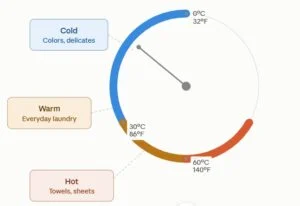

Why temperature matters?
Water temperature affects three things during a wash cycle:
- Cleaning power ; Heat helps dissolve detergent and break down oils, grease, and certain stains
- Fabric care ; Some materials shrink, fade, or weaken when exposed to heat
- Hygiene ; Higher temperatures kill more bacteria and allergens
Choosing the right temperature means balancing these three factors for whatever you’re washing. Temperaure Categories are explained below.
1. Cold water (below 30°C / 86°F)
When to Use Below 30°C:
a) Highly sensitive delicates: Protects fine lace, sheer fabrics, and screen-printed graphics.
b) Extreme fade-risk items: Stops brand-new dark denim or vibrant reds from bleeding dye.
c) Protein-based stains: Keeps blood, sweat, and dairy from cooking and permanently setting into the fabric.
d) Removing fresh, non-greasy stains like sweat, mud, or wine, and washing items that are already fairly clean.
Everyday loads, dark or bright colors, delicates, activewear, and anything labeled “wash cold” Cold water is gentle on fabrics and colors, which means less fading, less shrinking, and clothes that keep their shape longer.
When to Avoid Below 30°C:
oily or greasy stains and heavy soil : cold water alone often can’t fully break these down.
2. Warm water (around 30–40°C / 86–104°F)
When to Use 30°C:
a) Everyday clothes: Perfect for shirts, jeans, and casual wear with light soil.
b) Bright or dark colors: Low heat prevents dyes from bleeding, fading, or running.
c) Delicate fabrics: Safely cleans wool, silk, and synthetic blends without shrinking them.
Regular everyday laundry, moderately soiled clothing, synthetic fabrics, and mixed loads
Warm water is the middle ground – enough heat to help lift dirt and oils, without the fabric-damaging risks of hot water. It’s a safe default for most household laundry when you’re not sure which temperature to pick.
3. Hot water (60°C / 140°F and above)
When to Use 60°C :
a) Beding and sheets: Removes dust mites and allergens
b) Towels, cloth diapers: Kills trapped bacteria and prevents sour smells.
c) Illness recovery: Sanitizes items if someone in the house has a virus or stomach bug.
d) Dirty baby clothes: Cleans heavy stains and bacteria safely
e) heavily soiled workwear, and anything that needs deep sanitizing.
Hot water is the most powerful cleaner and sanitizer. It breaks down grease and oil effectively and kills more bacteria, dust mites, and allergens than cold or warm water can.
When to Avoid 60°C:
a) Colors and dark clothes: High heat makes bright or dark dyes fade or bleed.
b) Wool and silk: Delicate fibers will shrink or stretch out of shape.
C) Stretch fabrics: Clothes with elastane or spandex (like activewear and leggings) lose their stretch.
d) Everyday wear: Regular low-temperature washes (30°C or 40°C) with good detergent keep normal clothes clean.
Hot water can shrink certain fabrics, fade colors, and set some stains (like blood or egg) permanently instead of removing them – so it’s best reserved for whites, heavily soiled items, and fabrics that can handle it.
4. Matching temperature to the Job
| Item | Proposed Temperature |
| Everyday colored clothes | Cold or warm |
| Whites and light fabrics | Warm or hot |
| Bed sheets and towels | Hot |
| Delicate and active wear | Cold |
| Greasy or heavily soiled items | Hot |
| Fresh stains (non-oily) | Cold |
| Baby clothes / cloth diapers | Hot |
5. As a general rule
There’s no single “best” temperature , it depends on the fabric and the job.
When in doubt, wash cold to protect your clothes , and turn up the heat only when you need deeper cleaning or sanitizing, like with towels, sheets, or heavily soiled items.
At Sunrise Laundry & Cleaners (SLC) Ltd , we sort every load by fabric type and soil level, then match it to the ideal wash temperature ,so your clothes come back cleaner, fresher, and better cared for than they would be in a one-size-fits-all wash.